
By Oluwabunmi Awolusi
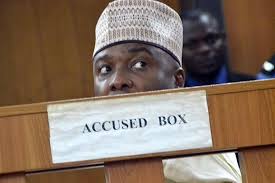
Now that the Nigerian sitting Senate President, Dr. Bukola Saraki will not be returning to the National Assembly in the next legislative session, concerns grow as to whether the Police and the Economic and Financial Crime Commission (EFCC) would be revisiting the cases of money laundering and bank fraud leveled against him. Another question is what were the roles of Zenith and Guaranty Trust banks in these alleged criminal activities? Were they coerced or willing participants? What role did Sanusi Lamido play as the Governor of Central Bank as they happened under his watch as the Governor of Nigeria’s Apex bank at the time? There is also his alleged role in how Access bank stole Intercontinental bank also with the help of Lamido Sanusi.
The Questionable N160M Loan by Zenith to Bukola Saraki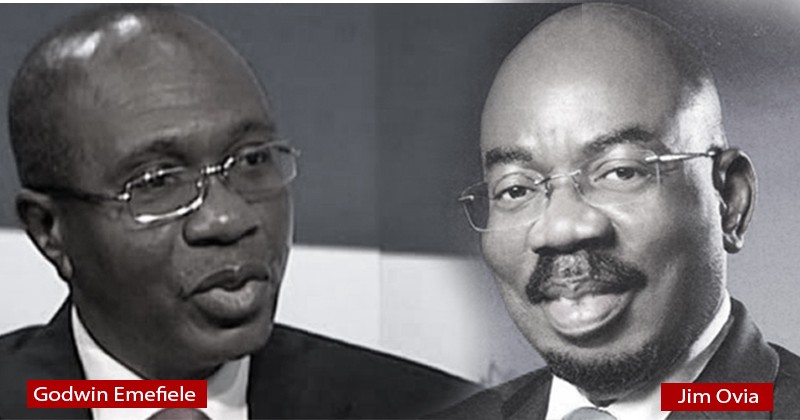
In 2011 the Special Fraud Unit of the Nigeria Police initiated an investigation upon receipt of a petition from the management of Joy Petroleum alleging that Zenith Bank denied them access to the company’s account because of alleged illegal change of signatory to the account by unknown persons. The Police Special Fraud Unit, in its investigation, discovered that Zenith Bank under Jim Ovia and Godwin Emefiele granted a bank draft of 160 Million Naira to Dr. Bukola Saraki who was not a customer of the bank. Dr. Saraki at the time of the loan application did not have an account, either current or savings, with Zenith, yet the bank granted him a loan of 160 million Naira without collateral. The investigators also find evidence of an N200,000,000.00 loan facility that was credited to Joy Petroleum Ltd. This discovery triggered further inquiries with Zenith Bank as to the source of the N160 Million Draft. Zenith Bank had claimed in a letter dated May 8th, 2012, that it was part of the N200 million (two hundred million) facility that was granted to Joy Petroleum Ltd to finance its operations.
To confirm Zenith’s claim, the Police requested that Zenith Bank provides Joy Petroleum Ltd’s statement of account from inception till date and supply the identity of the authority that authorized the draft to be made from the loan. In its response, Zenith bank reversed itself via a letter dated July 27th, 2012 claiming that the draft was brought in the name of Joy Petroleum Ltd, by a customer of the bank without disclosing the name of this supposed customer. However, under pressure Zenith Bank later reluctantly revealed that Dr. Bukola Saraki is the customer that bought the N160 million Draft in the name of Joy Petroleum Ltd. Pressed to provide details of the account from which Dr. Bukola Saraki made the Draft, Zenith Bank through a letter dated September 10th, 2013 claimed that Dr. Bukola Saraki was granted a loan of N160 million (one hundred and sixty million) naira that he requested should be raised in the name of Joy Petroleum Ltd as a draft. The bank had nevertheless also stated that Dr. Bukola Saraki was not a customer of the bank (i.e. Zenith Bank) and does not maintain an account with Zenith. If Dr. Bukola Saraki is not an account owner how was he able to obtain N160M bank draft from Zenith? Is that a normal practice? Did the Central Bank of Nigeria know about this? If yes what was the Lamido Sanusi-led Central Bank’s reaction to such a questionable deal?
The Police then asked Zenith Bank to prove the existence of the said loan since it had said Dr. Bukola Saraki was not a customer of the bank. The bank had consequently in response to the query, made available an N160 Million Naira Loan Letter of Offer to Dr. Bukola Saraki dated November 25th, 2009.
Since Dr. Bukola Saraki is not an account holder with the bank (Zenith) and since the approved loan must be disbursed into an account on which Dr. Bukola Saraki had exclusive control and on which he must pass the instructions to raise the draft in favor of Joy Petroleum either by way of issuing a cheque or by letter of instruction, the Special Fraud Unit requested that Zenith Bank forward the details of such account into which the disbursement of the loan to Dr. Bukola Saraki was made and how or by what means he (Saraki) requested the draft to be made.
In its response, the bank tendered two documents-An internal ledger statement of account in the name of Dr. Bukola Saraki showing a debit withdrawal of N160 million on the 26/11/2009 and a credit deposit of #11,901,369.98 on 26/05/2010. It also provided to the police, a page of the bank’s Manager’s Cheque register showing that a draft of N160 million in favor of Joy Petroleum Ltd was signed for by one Uche Phillips. However, the bank left unanswered, the issue of ‘into which account’ the loan was disbursed. The bank also failed to produce any instruction from Dr. Bukola Saraki to show evidence that he operated this account (bank internal ledger account) and the cheque or instruction to the bank ordering the draft of N160 million to be raised which they could not produce. Police investigators observed that Dr. Bukola Saraki cannot operate this account because it is the bank’s internal ledger and it is impossible for him to make any withdrawals on this account without having a current account with the bank.
In its effort to unravel the bank to which the N160 million was paid, the Police Special Fraud Unit attempted to invite Mr. Jim Ovia for questioning but former President Jonathan Goodluck shut the interrogation down. He directed the SFU not to question Ovia. As a result of President Goodluck’s intervention, the Police could not conclude its investigation, and this explains the reasons why the then Attorney General refused to arraign Dr. Bukola Saraki. In his letter to the Inspector General of Police, the Attorney General then, Mr. Mohammed Adoke advised against taking any action against Saraki and his aides over the bank issue, according to him, since from the records available to his office, Dr. Saraki had not committed any offense to warrant such trial.
In a piece of legal advice to the Inspector General of Police on the move to prosecute Saraki and others named by the petitioner, dated 9th October 2012, with reference Number DPP/ADV: 061/12, and signed by the Director of Public Prosecutions of the Federation, Mrs. O.O. Fatunde, the AGF Office, noted that it would be improper to hold Saraki liable for the internal actions of the then Intercontinental Bank.
The AGF Office said: “It would, therefore, be improper and unjust in the circumstance to hold Dr. Saraki, Mr. Pinheiro or indeed the companies criminally liable for the internal actions and decisions of the bank and its officials touching on an exercise of discretion. “Every customer of a bank (corporate or individual) has the right to apply for a loan on the most favorable terms possible. This alone does not constitute an offense under any law because it is at the discretion of the bank to grant or refuse such loan application. “Dr. Saraki and Pinheiro are alleged to relate to the grant of the loans as promoter and director respectively of the companies. By Section 18 of the Act, a director or any other partner or officer of a company can only be held responsible in that capacity for the actions of the company if the company is guilty of an offense under the Act. “Since the company, in this case, cannot be held to have committed an offence under Section 15(1) (a), it follows that Dr. Saraki and Mr. Pinheiro cannot also be held criminally responsible only on account of having acted as promoter and director of the companies in connection with the said loan,” the DPP advised. Efforts to confirm from the Special Fraud Unit of the Nigeria police if the case is still open failed. The SFU has not responded to our email sent on March 28, 2019.
 Africanreporter
Leave a comment