
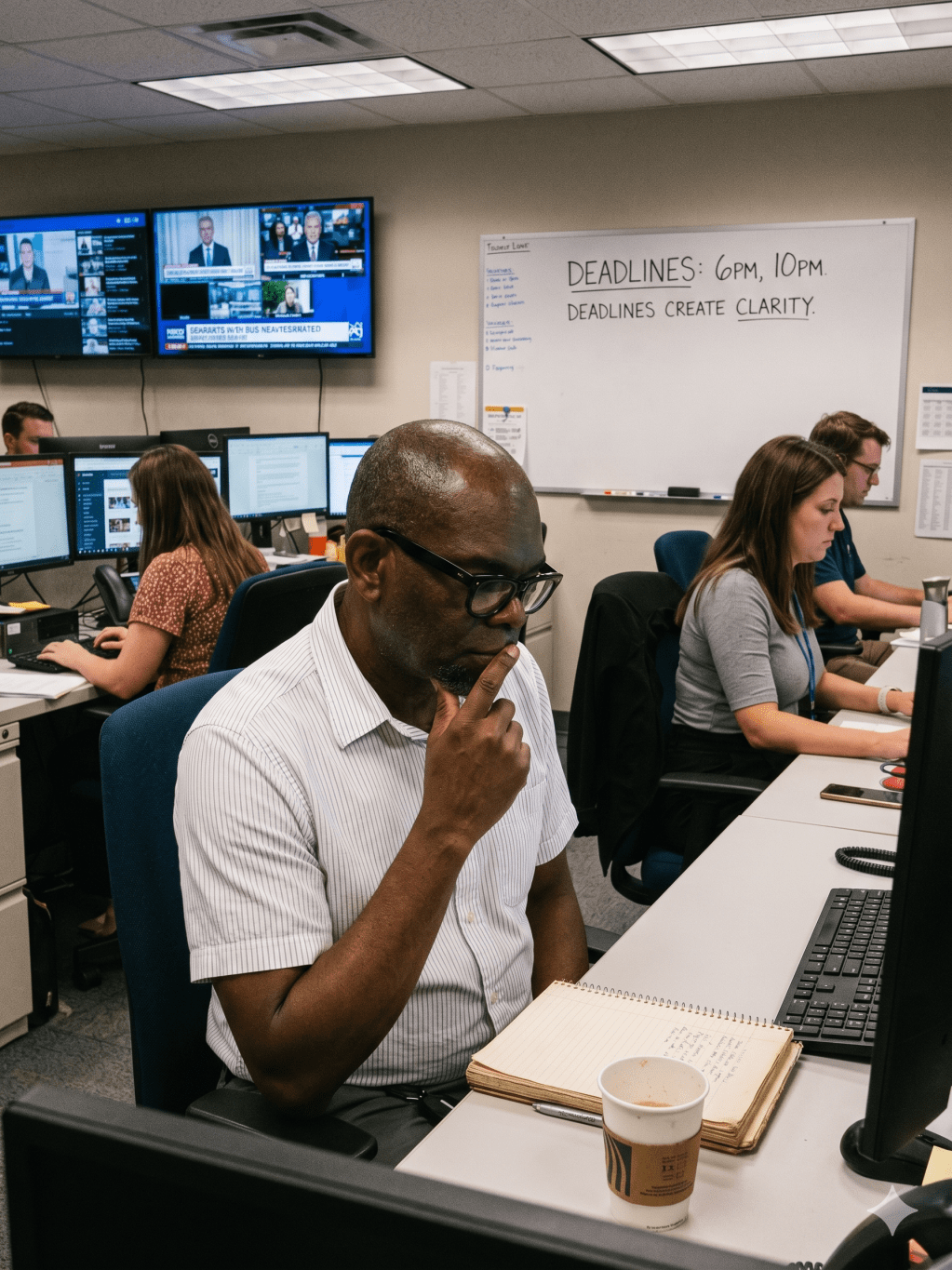
 On my first day in the newsroom, October 28, 1998, I met the Managing Editor, Babafemi Ojudu. He asked me why I was leaving the classroom for journalism. Then he gave me a warning. Journalism, he said, paid three times less than academic work.
He was right.
But my answer was simple: I had come to learn a new trade.
At the time, I meant it sincerely, though I did not yet understand how much that new trade would demand from me. I was coming from the classroom, where I had already been working as a lecturer, and I honestly thought the transition would be manageable. After all, I already knew how to write. I had done research, written academic work, and spent years around serious reading and serious thinking. I thought that background had prepared me well.
It had, but only partly.
Learning a New Language of Writing
What I did not understand then was that journalism demands a very different kind of writing. In the classroom and in academic work, writing can take its time. It can explain, qualify, and build slowly. In a newsroom, writing has to move. It has to be clear, sharp, and alive. It has to reach the reader quickly. That was the first shock for me.
My early writing as a journalist was full of academic habits. I wrote long sentences. I used formal expressions. I explained too much before getting to the point. In my mind, I was being thorough. In reality, I was burying the story under heavy language. I was writing as if I were addressing examiners, not everyday readers who simply wanted to know what happened and why it mattered.
That was a hard lesson to learn.
I can laugh about it now, but at the time it was frustrating. I knew I was intelligent. I knew I could write. So it was not easy to accept that the kind of writing I was proud of was not working in that space. Journalism has a way of exposing you quickly. The reader does not care how educated you sound if the story is dragging its feet. The newsroom wants the story, and it wants it clearly.
The Editors Who Shaped Me
What saved me in those early days was that I was surrounded by people who understood the craft better than I did. The lessons, discipline, and training I received from my editor, Gbenga Alaketu, the late Deputy Editor, Seidu Mulero, and Bamidele Johnson helped shape me in lasting ways. They each taught me, directly and indirectly, that writing for the public is not the same as writing for the classroom. In journalism, clarity is not a bonus; it is the job.
Then there was the copy editor, Wilson Uwujaren. He probably helped me more than anyone else, even when it did not always feel pleasant in the moment. I would turn in a story feeling fairly confident, and then it would come back trimmed, tightened, and stripped of much of the weight I had added to it. At first, I felt the sting. It is humbling when you think you have written something solid and someone cuts through it with that much precision.
One story, in particular, stays with me. I had reported on the cultivation of Indian hemp in Ondo and how minors were being used because those behind it understood that the law was less likely to come down heavily on children. My approach to the story was too academic. I had the facts, the research, and the structure, but the human angle was buried. Wilson saw that immediately. He reworked the story so the people inside it came forward, not just the issue. That became my first real feature and investigative piece, and it taught me a lesson I never forgot: facts matter, but people are what make readers stay.
That was exactly what I needed.
Over time, I began to understand that editing was not an attack on my intelligence or ability. It was teaching me how to communicate better. It was showing me that good writing is not about sounding complicated. It is about making meaning clear. I had to stop writing to impress and start writing to connect.
I also had to respect the reader more. A reader should not have to fight through a sentence just to understand a basic point. Journalism taught me that quickly, and sometimes brutally. But it taught me well.
When Reporting Became Investigation
As I settled into journalism, I realized something else about myself. I was not naturally drawn to the fast pace of daily reporting in the way some reporters were. I admired those who could jump on a story, file quickly, and move on to the next one without blinking. That takes real skill.
But I noticed that I wanted to dig deeper. I liked following the trail. I liked sitting with a story longer, asking more questions, and looking beyond the surface. I wanted to understand not just what happened, but what was behind it.
That was when I began leaning toward investigative reporting.
In many ways, investigative journalism felt like the place where my old world and my new world finally met. My research background was not wasted after all; it simply needed the right home. Investigative reporting gave me room to be curious, patient, and thorough, but in a way that still had to serve the public. It allowed me to bring analysis into journalism without sounding like I was writing for a seminar room.
Stories That Confirmed the Shift
I was later hired at Anchor Newspaper by Osita Nwajah, and that opportunity gave me more room to grow as a reporter. One of my reports there, Prison of Horror, gained wide attention and was cited in the CIA Factbook for 2001. For me, that was another confirmation that serious reporting could travel farther than I had imagined.
By 2000, that growth had also started to show in my work in a very public way. I won the Nigerian Media Merit Award as Defence Reporter of the Year for my story, Soldiers Grumble. It was published in Tempo magazine, and the demand was so strong that the magazine sold out and had to print more copies three times that week to meet it. That story taught me something important: when rigorous research is combined with strong reporting and a human-centered angle, the result can travel far beyond the page.
Another story that stayed with me was Incorrigible Debtors. The headline came from a comment by then-President Olusegun Obasanjo in an internal memo to Ambassador Dele Cole, based on a report he received from the Minister of Transport, Kema Chikwe, about members of his cabinet who had taken loans from a previous government and failed to repay them. The story made a major impact and was followed by her redeployment from Transport to Aviation. Experiences like that showed me the real power of journalism. A well-reported story could do more than inform; it could unsettle power.
What the Newsroom Really Taught Me
Looking back now, I can see that those early struggles were necessary. They were not signs that I had failed. They were signs that I was being stretched. I had entered journalism thinking I only needed a new job title, but what I really needed was a new voice, or perhaps a truer one. One that was less dressed up, less stiff, and more aware of the reader on the other side.
That experience made me more humble as a writer. It reminded me that writing well in one setting does not mean you automatically know how to write well in every setting. Every audience is different. Every form has its own demands. You have to listen before you can write well. You have to learn the rhythm of the space you are in.
Even now, when I think about that period in 1998, I do not just remember the difficulty. I remember the growth. I remember being sharpened by editors and colleagues. I remember learning to cut through my own habits. Most of all, I remember discovering that the strongest writing is often the clearest and most human.
So my first experience as a journalist was not just a career shift. It was a writing lesson I have carried with me ever since. The newsroom taught me that writing is not about proving how much you know. It is about reaching people.
Once I understood that, I began to write differently.
Maybe, in some ways, I began to write honestly for the first time.
 Africanreporter
Leave a comment