
By Oluwaseyi Oduyela
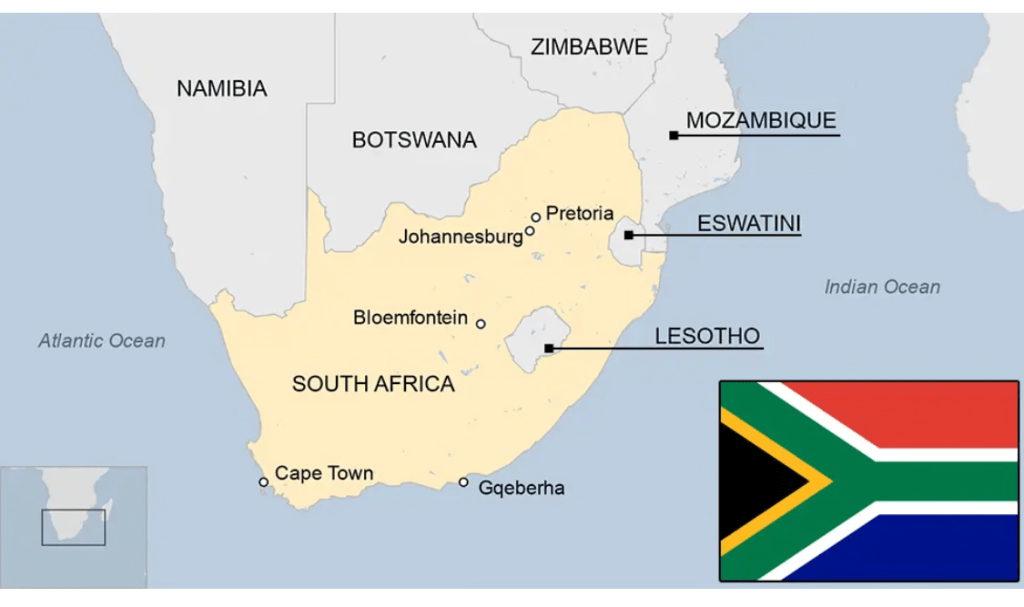
A neutral way to look at South Africa’s migration and xenophobia issue is to treat it as a systems problem where law, economics, and social perception interact, rather than as a single moral argument.
- The structural setup: high inequality and regional imbalance
South Africa is one of the more industrialised economies in Africa, with relatively stronger infrastructure, services, and urban markets. At the same time, it has very high unemployment and deep inequality internally.
Neighbouring countries in the SADC region often have weaker labour markets and fewer formal opportunities. That creates a predictable flow of regional migration toward South Africa, both legal and irregular. This is not unique to Southern Africa; it is typical of regional economic “pull zones” globally.
- Legal framework vs practical reality
On paper, South Africa has a fairly strict immigration system:
- Short visits may be visa-free for some SADC countries
- Work, business, or long-term residence requires permits
- Asylum is available under refugee law
In practice, enforcement capacity is uneven. The informal economy is large, documentation systems are sometimes slow, and municipal enforcement varies widely. That creates a gap where people can live and work outside formal compliance for extended periods.
This gap is important because it shapes perception: when laws are not consistently enforced, public understanding of what is legal becomes blurred.
- Labour market dynamics
Most competition and tension occurs in the informal and low-wage sectors:
- spaza shops and small retail
- street vending
- low-skilled service jobs
These sectors are sensitive because they sit close to survival income for many South Africans. When migrants enter these spaces, they are often perceived as competitors, even when the overall economic impact is more complex.
Economically, migrants can also increase supply of labour and entrepreneurship, sometimes lowering prices and increasing service availability. The net effect is mixed and highly localised.
- Crime: evidence vs perception
From a criminology standpoint:
- Crime in South Africa is primarily driven by domestic factors: inequality, organised local gangs, substance abuse networks, and historical spatial segregation patterns.
- Foreign nationals do participate in crime, including organised networks, but available evidence does not support the idea that they are the main drivers of national crime rates.
- However, certain cross-border syndicates do exist (for example in trafficking, counterfeit goods, or illicit trade routes), which can reinforce public concern.
A key analytical issue is visibility bias: crimes involving foreigners are more likely to be highlighted and remembered, which can distort perceived prevalence.
- Social perception and xenophobia
Public hostility tends to rise in waves during:
- economic downturns
- unemployment spikes
- service delivery protests
- political mobilisation
In these moments, migrants can become symbolic targets for broader frustration. This is less about individual behaviour and more about how societies assign blame under stress.
- Enforcement responses: two competing approaches
Countries facing similar dynamics usually oscillate between two strategies:
A. Strict enforcement model
- tighter border control
- raids on informal businesses
- deportations and compliance crackdowns
Potential effect:
- may increase short-term compliance
- can push migrants further underground
- sometimes increases tension and informalisation
- requires high enforcement capacity to sustain
B. Regularisation and integration model
- temporary or renewable work permits
- simplified documentation systems
- formalisation of informal traders
Potential effect:
- improves state visibility of population
- increases tax and regulatory compliance
- reduces arbitrary enforcement conflicts
- but can be politically unpopular during economic stress
- Key analytical conclusion
The South African situation is not best explained as either “open borders” or “foreign takeover.” It is better understood as a mismatch between:
- regional economic inequality
- domestic unemployment pressures
- and limited enforcement capacity in the informal economy
Xenophobia tends to emerge where these pressures intersect and where institutions cannot fully regulate or absorb economic competition at the informal level.
If we extend the analysis further, stricter enforcement and regularisation both have trade-offs. Enforcement can reduce visible irregular activity but often increases underground economies if not backed by strong administrative capacity. Regularisation can reduce friction and improve state control, but it only works when governments can process documentation efficiently and when there is political willingness to absorb short-term labour competition concerns.
 Africanreporter
Leave a comment