
By Oluwaseyi Oduyela
President Bola Tinubu’s advocacy for local government autonomy has reignited a national conversation about grassroots governance in Nigeria. The Supreme Court’s 2024 judgment directing that federal allocations be paid directly to local government councils was celebrated by many as a landmark victory for democracy and development at the local level.
Yet, beneath the optimism lies a deeper constitutional problem that cannot be solved by presidential pronouncements, court judgments, or policy directives alone.
The fundamental challenge is that the 1999 Constitution sends conflicting messages about the status of local governments in Nigeria.
On one hand, Section 7 of the Constitution guarantees the existence of democratically elected local government councils. This provision appears to recognize local governments as an important component of Nigeria’s federal structure.
On the other hand, the same Constitution places local governments under the legislative control of state governments. Section 7(1) empowers state Houses of Assembly to enact laws governing the establishment, structure, composition, finance, and functions of local government councils.
This contradiction has created decades of constitutional confusion.
How can a government be autonomous when another level of government determines its structure, powers, finances, and operational framework?
The contradiction becomes even more apparent in Section 162(6), which established the State Joint Local Government Account. For decades, funds intended for local governments have passed through mechanisms heavily influenced by state governments, creating persistent allegations of interference, diversion, and financial dependence.
This is why the debate over local government autonomy should not be reduced to direct allocation of funds. Financial autonomy alone does not guarantee genuine autonomy.
The deeper issue is constitutional design.
Many constitutional scholars have long argued that local governments in Nigeria are not truly a third tier of government in the same sense as the federal and state governments. Unlike the federal and state governments, local governments do not enjoy constitutionally guaranteed sovereignty over their existence, powers, and administration. Their legal status remains largely dependent on state legislation.
This places local governments in a unique and often contradictory position. They are described politically as a third tier of government, yet they function constitutionally more as subordinate institutions operating under significant state control.
The result is a governance structure that satisfies neither federalist principles nor the ideals of grassroots democracy.
The Supreme Court judgment of 2024 may strengthen financial independence, but it does not remove the constitutional provisions that permit extensive state involvement in local government affairs. Likewise, presidential support for autonomy cannot override constitutional provisions that define the relationship between states and local councils.
This reality points to a conclusion many policymakers have been reluctant to confront: Nigeria does not simply need local government autonomy; it needs a comprehensive restructuring of its local government system.
A genuine reform agenda should include a constitutional review that clearly defines the status of local governments within the federation. Nigerians must decide whether local governments should be independent constitutional entities or administrative extensions of state governments.
The current arrangement attempts to make them both, and that is the source of the problem.
A meaningful overhaul should address several key questions:
- Should local governments remain creations of state governments?
- Should local governments have constitutionally protected powers that cannot be altered by state legislation?
- Should local governments maintain direct access to federal allocations without state intermediaries?
- Should local government elections be conducted by independent national electoral institutions rather than state-controlled electoral bodies?
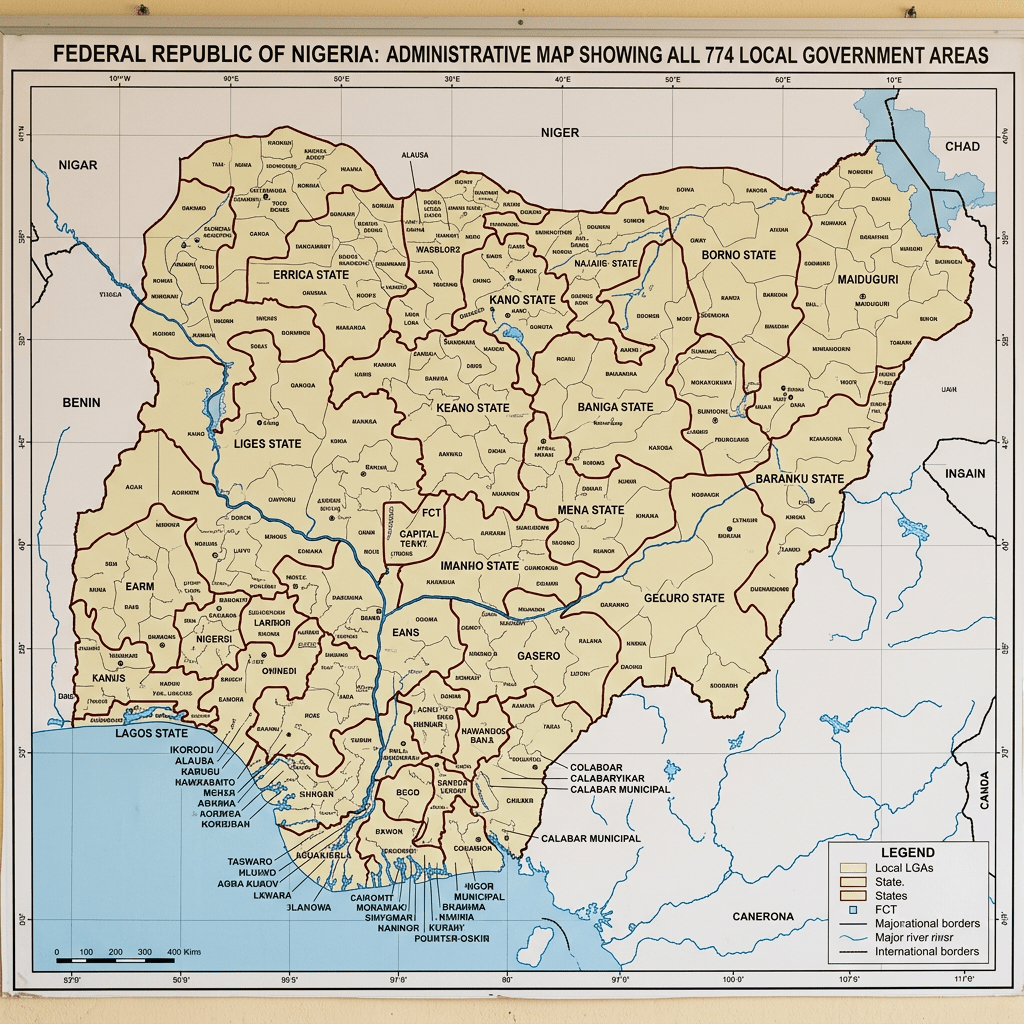
- Should Nigeria retain the current 774 local government structure or redesign local governance based on population, economic viability, and administrative efficiency?
These are not merely legal questions. They are questions about democracy, accountability, development, and the future of governance in Nigeria.
The truth is that local government autonomy cannot be achieved through political slogans or court victories alone. The problem is structural, and structural problems require structural solutions.
Until Nigeria undertakes a serious constitutional overhaul that resolves the contradictions surrounding local government administration, discussions about autonomy will continue to generate headlines without producing the transformative change that citizens expect.
The challenge before Nigeria is therefore larger than local government autonomy. It is the challenge of redesigning a constitutional framework that has, for decades, struggled to reconcile the promise of grassroots democracy with the reality of centralized control.
Until that happens, local government autonomy may remain more of a political aspiration than a constitutional reality.
 Africanreporter
Leave a comment