
By Oluwaseyi Oduyela
A Dysfunctional System That Rewards Disconnection
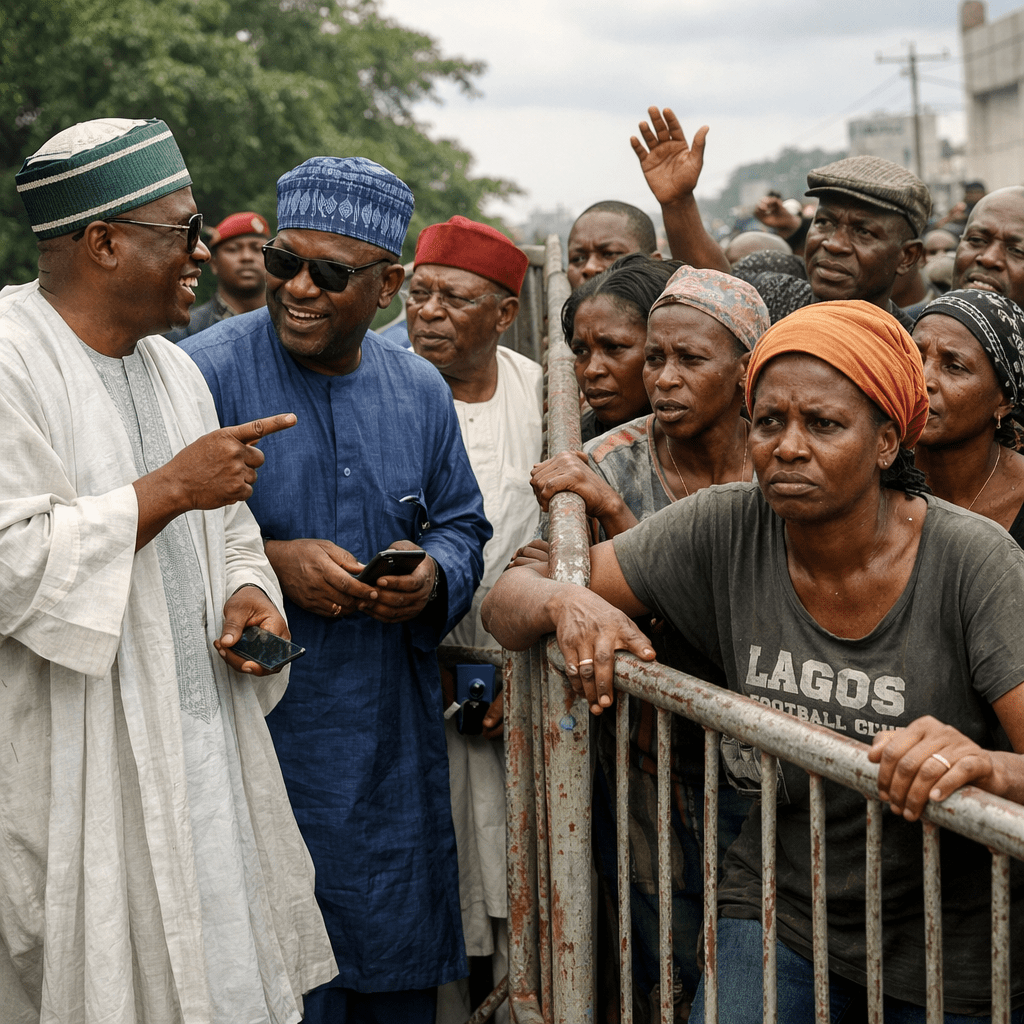
One of the greatest problems confronting Nigeria today is not merely corruption, economic hardship, insecurity, or poor governance. It is the existence of a dysfunctional political system that rewards disconnection between leaders and the people they are elected to serve.
Across the country, citizens are being asked to make sacrifices. They are told to endure economic reforms, rising food prices, high transportation costs, unemployment, and declining purchasing power in the hope that better days lie ahead. Yet many of the actions of those in power suggest that the burden of sacrifice is not being shared equally.
The issue is not that governments spend money or that public officials perform official functions. The issue is one of priorities and perception.
When workers at Tai Solarin College of Education are owed salaries while government finds resources to purchase SUVs for traditional rulers, citizens are left wondering whether their struggles truly matter. When lawmakers approve new vehicles and enjoy generous allowances in the midst of widespread hardship, many Nigerians see leaders who appear increasingly detached from everyday realities.
The same disconnect is evident in matters of security. Nigerians are often impressed by the speed with which security agencies can mobilize resources to rescue politically connected individuals or relatives of powerful public figures. Yet countless ordinary citizens abducted from farms, schools, highways, and communities remain in captivity for weeks, months, or are never found. The message this sends, whether intended or not, is that some lives attract greater urgency than others.
At the federal level, the optics are no better. The public watches members of the political elite move through the country with privileges and access that seem far removed from the realities facing ordinary citizens. Stories of political families wielding influence, accessing opportunities, and benefiting from government connections reinforce the perception that Nigeria is slowly nurturing a political aristocracy rather than a democracy built on public service.
Perhaps nowhere is this more evident than in the legislature. Nigerian senators, members of the House of Representatives, and state legislators enjoy benefits that many citizens consider excessive. Beyond salaries and allowances, constituency funds are allocated in their names. Yet many communities cannot point to projects that have significantly improved their quality of life. Citizens are therefore left asking a legitimate question: if billions of naira are being spent on representation, where are the measurable results?
Government officials often respond by pointing to economic indicators, revenue growth, investment inflows, and reform achievements. While these statistics have their place, citizens experience governance differently. They judge governments by the affordability of food, the reliability of electricity, the safety of roads, the availability of jobs, the prompt payment of salaries, and the effectiveness of security. When official narratives fail to align with lived realities, public trust inevitably declines.
However, it would be too simplistic to blame individual politicians alone. The deeper problem lies within the system itself.
In functional democracies, institutions serve as a constant reminder that power belongs to the people. Public spending is scrutinized. Elected officials face meaningful oversight. Political parties compete on ideas and performance. Citizens can clearly assess whether leaders have delivered on their promises.
Nigeria’s experience has often been different.
Political parties frequently revolve around personalities rather than ideology. Internal democracy is weak, and candidates often emerge through patronage networks rather than merit. Once elected, many politicians enter a system that provides enormous privileges while demanding very little accountability.
Public institutions that should serve as checks on power are often weakened by political interference, inadequate transparency, or poor enforcement. As a result, leaders can remain disconnected from the people without facing significant consequences.
This dysfunction gradually produces a culture of entitlement. Surrounded by aides, convoys, official residences, and layers of protection, leaders become insulated from the realities facing ordinary Nigerians. Over time, that insulation evolves into what many citizens perceive as arrogance. Not necessarily arrogance expressed through words, but arrogance demonstrated through decisions, priorities, and a seeming inability to appreciate the struggles of the people.
Yet there is an even greater irony.
The same citizens who complain about poor governance often return the same political actors to power. Poverty makes vote-buying effective. Ethnic, religious, and regional loyalties frequently outweigh considerations of performance. Political actors exploit these divisions, encouraging citizens to defend personalities rather than demand accountability.
Consequently, people who share the same economic hardships often find themselves attacking one another while defending politicians whose interests may not align with their own. The masses become divided, while the political class remains remarkably united in preserving its privileges.
This is why the cycle persists.
The system rewards disconnection. Politicians learn that elections can be won through patronage, identity politics, and short-term inducements rather than measurable performance. Citizens become conditioned to expect little from government. Institutions become weaker. Accountability becomes rare. The cycle then repeats itself.
The greatest danger is not public anger. Democracies can survive anger. The greater danger is cynicism. When citizens begin to believe that every government will eventually prioritize elite interests over public welfare, confidence in democratic institutions begins to erode. People stop expecting good governance and focus solely on surviving the system.
Nigeria does not lack talented people, abundant resources, or democratic aspirations. What it lacks is a governance structure capable of consistently rewarding competence, accountability, and service while punishing failure and indifference.
Until institutions become stronger than individuals, until accountability becomes more important than political loyalty, and until public office is viewed as a responsibility rather than a privilege, Nigeria will continue to grapple with a dysfunctional system that rewards disconnection.
 Africanreporter
Leave a comment